This newsletter summarises the activities carried out and the results achieved in MONA LISA in the first half of 2026, together with the dissemination activities that followed. In this period, the project moved from specification to implementation, and the first prototypes were applied to industrial data.
Project management
The first annual project review was held online in January 2026, where the consortium presented the results of the first project year. The Project Consortium Agreement was signed by all partners. The ramp-up of the project was completed, and the validation criteria, key performance indicators and acceptance criteria against which the project results will be assessed were defined.
Project website
The MONA LISA website, www.monalisaio.com, was launched in February 2026. It presents the project, the consortium partners, the industrial use cases, news and publications, and is maintained by the partners through a shared content management system.
Industrial use cases and traceability
The use cases were revised on the basis of the experience gained from the first implementation activities, and the requirements baseline was updated accordingly. Building on concepts from the ITEA BUMBLE project, traceability models were developed that connect stakeholder needs, use cases, requirements, design decisions, validation activities and demonstrator results across the engineering lifecycle.
Technical progress
Trace and log data shared by all partners
All data-providing partners made their trace and log files available in a common project repository. The repository contains real-time software traces from HCL, railway system logs from Alstom, bridge monitoring data from CNet, thermal camera logs from Teledyne FLIR and production data from the BDÇ steel plant, most of them also converted to the Google Trace Event Format. From version 3.5.0 of Code RealTime, the conversion to this format is available as a built-in feature. The shared data is the input for model re-engineering, anomaly detection and visual analytics.

Model re-engineering and anomaly detection
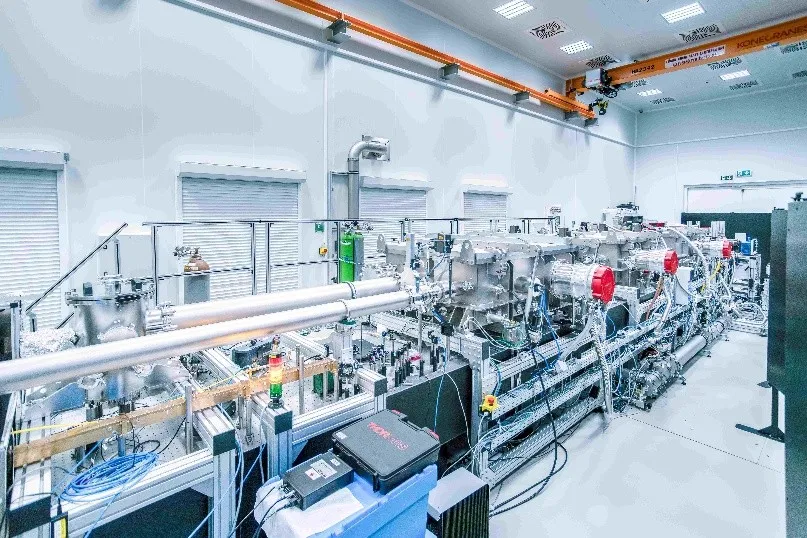
FrontEndART and the University of Szeged developed a prototype that builds higher-level models from trace logs and detects anomalies in them. The prototype was applied to the first data set from ELI ALPS and is deployed as a Docker container, so that it can be applied to the other use cases.
Run-time tracing
New releases of Model RealTime and Code RealTime extended the tracing capabilities with new visualisation and analysis features and an improved browser-based sequence-diagram view, supporting diagnostics and root cause analysis.
Data collection and analytics at BDÇ
At the Bilecik Demir Çelik steel plant, the data collection framework planned in 2025 was implemented. Data from heterogeneous industrial systems is collected, standardised and connected to the MONA LISA analytics framework, providing improved visibility into the furnace processes and supporting the identification of optimisation opportunities.

Publications
The following papers by researchers at Mälardalen University and their co-authors were published in 2026. All papers are available on the publications page.
- Folklore in Software Engineering: A Definition and Conceptual Foundations, CHASE 2026 (February 2026)
- Test Design and Review Argumentation in AI-Assisted Test Generation, ITEQS 2026 (May 2026)
- (Over)Reliance on Test Agents in AI-Assisted Software Testing, ORCAS 2026 (May 2026)
- Who Tests the Tests? Model-Based Validation of AI-Generated Test Cases, DT-MBT 2026 (June 2026)
Dissemination
MONA LISA was presented at the ITEA Project Outline Preparation Days 2026 in Istanbul with a project poster. The presentation included the results of the BDÇ use case and showed how industrial data is turned into actionable insight through integrated monitoring and analytics. The project poster is available on the publications page.
Next steps
- Integration of the data from all use cases into the shared repositories and Eclipse Trace Compass, and validation of the end-to-end processing pipeline.
- Application of the data processing workflows defined in D4.1 to the use case data.
- Continued work on large language models and AI-based analysis, with root cause analysis, anomaly detection and predictive maintenance as first targets.
- Project exhibition booth and demonstration at ITEA, the plenary meeting in October 2026 and the second annual project review in November 2026.